Does a Paint and Primer In One Really Work?
If you’ve walked into a paint store lately, you’ve probably seen plenty of products advertised as “paint and primer in one.” It sounds like the perfect solution, one product, fewer steps, and less work. But does paint and primer in one really work?
The short answer is: yes and no.
After 17 years in the home improvement industry, I’ve learned that a product being heavily marketed doesn’t necessarily mean it is the best choice for every project. Paint and primer in one is a good product, but where and how you use it matters.
When Paint and Primer in One Works Well
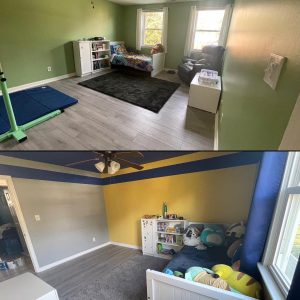
For certain projects, paint and primer in one can be an excellent choice. At Powerhouse Painting and Home Improvement we commonly use it when changing the color of an existing painted surface, whether we’re working on an interior painting or exterior painting project.
If the existing surface is already properly painted, clean, sound, and in good condition, a quality paint-and-primer product can provide good coverage while helping you achieve the new color you want.
That’s where the convenience really comes into play.
When You Should Use a Separate Primer
Where homeowners can run into trouble is using paint and primer in one as a substitute for a dedicated primer on raw or unpainted surfaces.
For example, if you have:
Raw drywall
New or raw wood
Other unpainted surfaces that require priming
I recommend using a dedicated primer first, followed by your normal finish paint.
In fact, we’ve spoken with representatives from two competing major paint manufacturers, and both recommended against using their paint-and-primer-in-one products as a replacement for dedicated primer on raw surfaces.
There’s an important distinction here: paint-and-primer-in-one is not necessarily the same thing as a true primer designed for a specific surface.
Why Proper Priming Matters
Primer serves an important purpose beyond simply adding another coat of paint. Depending on the surface, the right primer can help with adhesion, absorption, sealing, stain blocking, and creating a more uniform surface for your finish coat.
Raw drywall, for example, is highly absorbent. Applying finish paint directly to it can result in uneven sheen, inconsistent coverage, and a finish that doesn’t look the way you expected.
Raw wood can present its own challenges, including absorption, tannins, knots, and adhesion issues depending on the type of wood and the coating you’re applying.
That’s why choosing the right primer for the surface is often more important than simply choosing a product that promises to do everything in one step.
Powerhouse Pro Tip
If you’re simply changing the color of an existing, properly painted surface, paint and primer in one can be a great option.
If you’re working with a raw, new, damaged, stained, or otherwise difficult surface, don’t skip the primer.
When you’re unsure whether a project needs primer, our advice is simple: when in doubt, prime it.
We’ve seen situations where homeowners used paint and primer in one for an application it wasn’t intended for, only to have the coating fail or produce disappointing results. Taking the extra step with the right primer can save you time, money, and frustration later.
The Bottom Line
Paint and primer in one isn’t a bad product—it’s just not a universal solution.
Marketing may make it sound like you can eliminate primer from every painting project, but experienced professionals know that every surface is different. The key is understanding what you’re painting and choosing the coating system that’s appropriate for the job.
If you’re unsure whether your next project needs primer, we’re always happy to help you determine the best approach. A little preparation and the right products can make a big difference in how your finished paint job looks and how long it lasts.